
 Image 1 of 2
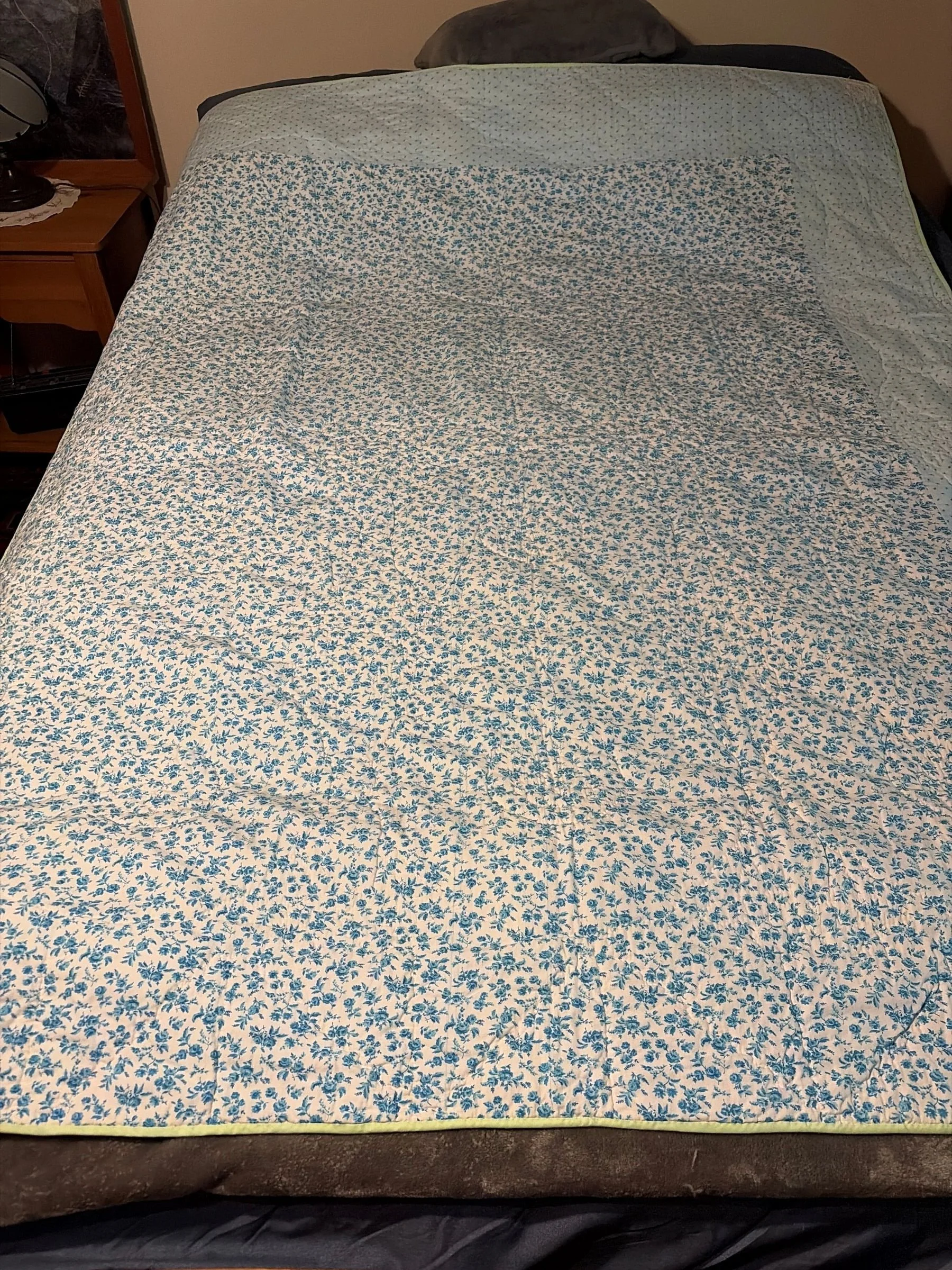 Image 2 of 2
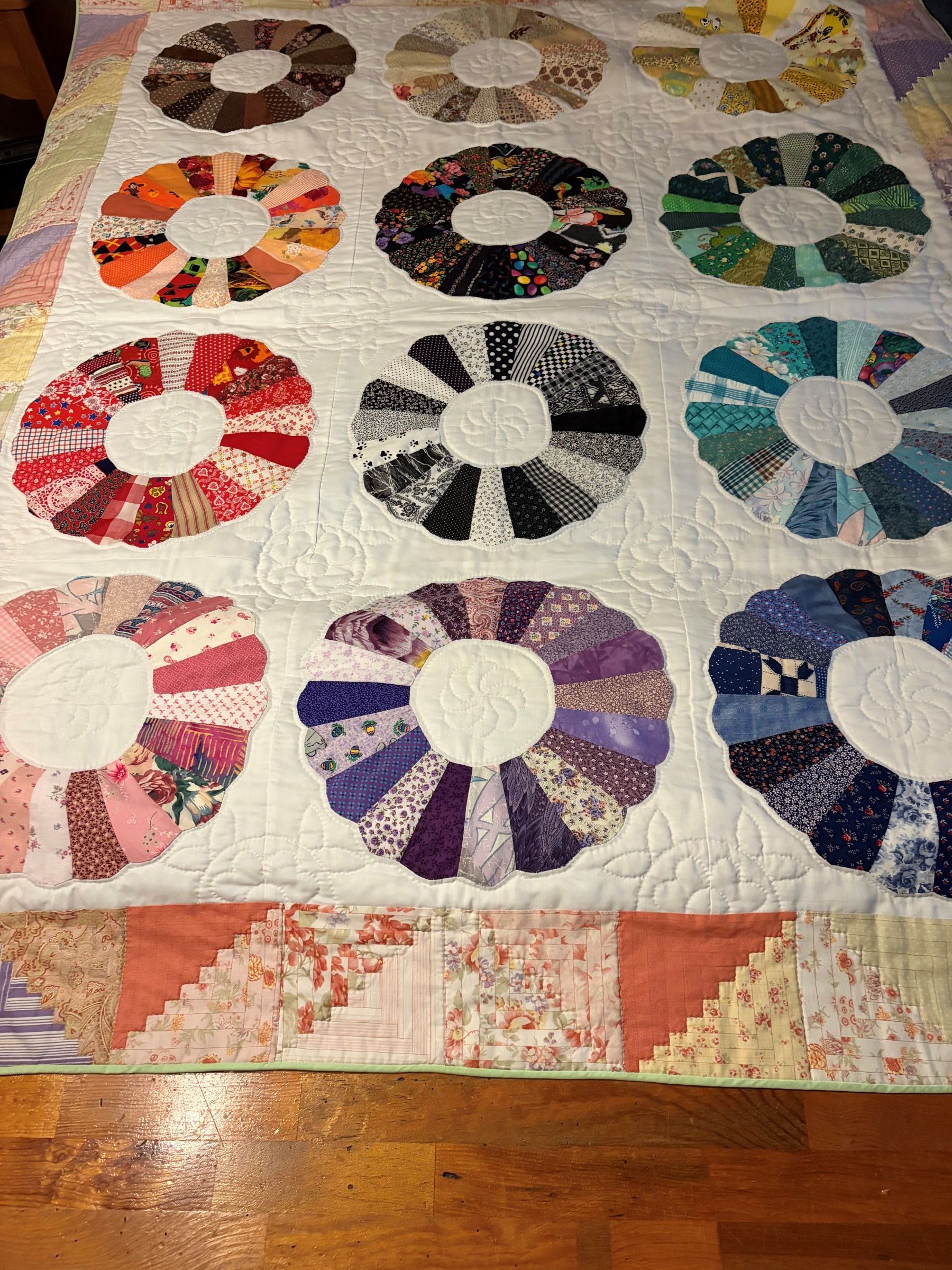
Hand quilted and appliquéd by Tina Tuttle in 2019. The plate patterns are machine pieced in a color wheel pattern. The size is 56” wide by 73” long. (FYI, a queen bed is 60”x80”). Plates are machine pieced in color wheel. The fabric is 100% cotton and is washable.
A Dresden Plate quilt is a classic American patchwork design featuring pieced, petal-shaped fabric "blades" arranged in a circle to resemble a blooming flower or antique porcelain plate. Dating back to the 1920s, it traditionally uses 20 wedge-shaped blades sewn around a circular center, which are then appliquéd onto a solid background square. The "Dresden Plate" is named after the German city of Dresden, which was globally renowned during the 19th and early 20th centuries for its exquisite decorative porcelain plates and china.
The pattern peaked during the Great Depression. Because fabric was scarce, resourceful seamstresses used the small, petal-shaped wedges to piece together beautiful patterns from tiny scrap fabrics.
At the height of its popularity, the block was also frequently referred to as "Grandmother's Sunburst," "Sunflower," or "Aster."
This raffle is live for 30 days. Your purchase is given a ticket number or numbers. The winning number will be drawn on July 15, 2026, at Noon, and posted on FFGC’s Facebook page. The winner will be called and emailed immediately.
No tax is charged on this raffle donation.
Hand quilted and appliquéd by Tina Tuttle in 2019. The plate patterns are machine pieced in a color wheel pattern. The size is 56” wide by 73” long. (FYI, a queen bed is 60”x80”). Plates are machine pieced in color wheel. The fabric is 100% cotton and is washable.
A Dresden Plate quilt is a classic American patchwork design featuring pieced, petal-shaped fabric "blades" arranged in a circle to resemble a blooming flower or antique porcelain plate. Dating back to the 1920s, it traditionally uses 20 wedge-shaped blades sewn around a circular center, which are then appliquéd onto a solid background square. The "Dresden Plate" is named after the German city of Dresden, which was globally renowned during the 19th and early 20th centuries for its exquisite decorative porcelain plates and china.
The pattern peaked during the Great Depression. Because fabric was scarce, resourceful seamstresses used the small, petal-shaped wedges to piece together beautiful patterns from tiny scrap fabrics.
At the height of its popularity, the block was also frequently referred to as "Grandmother's Sunburst," "Sunflower," or "Aster."
This raffle is live for 30 days. Your purchase is given a ticket number or numbers. The winning number will be drawn on July 15, 2026, at Noon, and posted on FFGC’s Facebook page. The winner will be called and emailed immediately.
No tax is charged on this raffle donation.